End of Semester Reflection

The most important thing I’ve learned this semester is that being a Vivero Fellow is way more hands-on than I expected. Coming in as a CS major who’s more interested in software than physical objects, I thought I’d mostly be helping people with coding or website stuff. Instead, I spent a lot of time learning how to use 3D printers, sanding prints, and writing descriptions for a physical display. I realized that digital scholarship isn’t just about the digital part.

If I could give advice to past me, it would be to not be afraid to just mess around with things. I was really cautious at first with expensive equipment, worried I’d break something. But you learn way more by actually using the tools and making mistakes than by just reading about them. Also, ask for help sooner. I wasted time trying to figure things out on my own when I could’ve just asked someone who already knew (aka Max).

Another advice I would give is to not sand too quickly because otherwise your hand will burn… lessons were learned the hard way.

I think the training model worked pretty well overall. I liked having a task every month.

I will be abroad next semester so I won’t be here unfortunately… but I do plan to come back afterwards!

For future exploration, I’m considering learning Blender more seriously. 3D modeling seems like a natural next step after all of the 3D printing I’ve done! I think being able to design my own models instead of just printing other people’s files would be pretty cool. I’m also interested in accessibility and inclusive design, especially after writing those display descriptions and thinking about how to make technical information approachable for everyone.

This semester pushed me outside my comfort zone in a good way. I came in thinking I’d mostly do software stuff, and I’m leaving with actual making skills and a better understanding of what digital scholarship really means.
Documentation Feedback

The documentation I created are the descriptions for the 3D print display items. This is a different kind of documentation than the usual “here’s how to use this tool” because these descriptions are meant for anyone walking by, not just future Vivero Fellows.

My approach to documentation is honestly pretty chaotic. I write things when I feel like it, which isn’t the most systematic approach but it works for me. For this project specifically, I put a lot of thought into making the descriptions actually interesting to read because of my personal experience. To be honest, I get really bored from art museum labels… I read a couple, maybe some, and then just start looking at the art without reading anything. I didn’t want that to happen with our display. That’s why I tried to make each description quirky and approachable. For example, instead of just saying “this is a mathematical surface,” I’d explain why it looks like a sombrero and how you could make your own. The goal was to make someone walking by actually stop and read, not just glance and move on.

The struggle is that I make a lot of edits. I’ll write a description, think it’s okay for now, then rewrite it three times because it sounds too formal or too casual or not interesting enough. I also ask for a lot of feedback — I sent revised descriptions to the students whose work I was describing to make sure I wasn’t misrepresenting their projects. That back-and-forth helped me find the right balance between being accessible and being accurate.

Looking back at my documentation now, trying to imagine I’m someone new seeing these descriptions, I think they do a pretty good job of capturing what each print is about while keeping things engaging. Some of them might need tweaking once we actually put them up and see how people respond, but overall I’m content with how they turned out.

My general approach to documentation is to write what you’d want to read. If I’m bored writing it, someone else will definitely be bored reading it. For these display descriptions, that meant adding personality, asking questions, and connecting the prints to real-world applications people might care about. It’s not the most efficient process since I revise so much, but I think the end result is worth it.

The hardest part is knowing when to stop editing. At some point you just have to accept that it’s good enough and move on, which is something I’m still working on. (This is why I don’t like writing papers and have never taken an English class here).

Sample

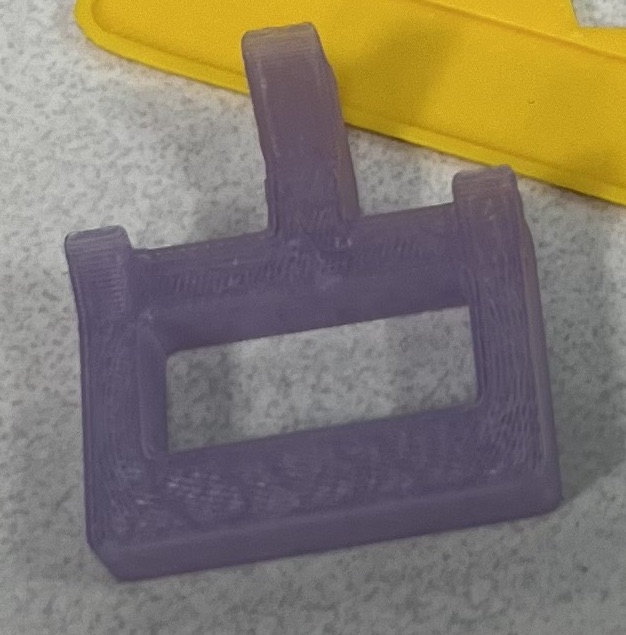
Title: Upcycled Bike Touring Straps
Creator: Ethan Versh ’27
Description: A sustainable approach to bike touring gear, these straps combine 3D-printed buckles (from an online STL file) with recycled bicycle inner tubes and contact cement. This project demonstrates how 3D printing can be integrated with traditional materials and upcycling to create functional, custom equipment. (Source)

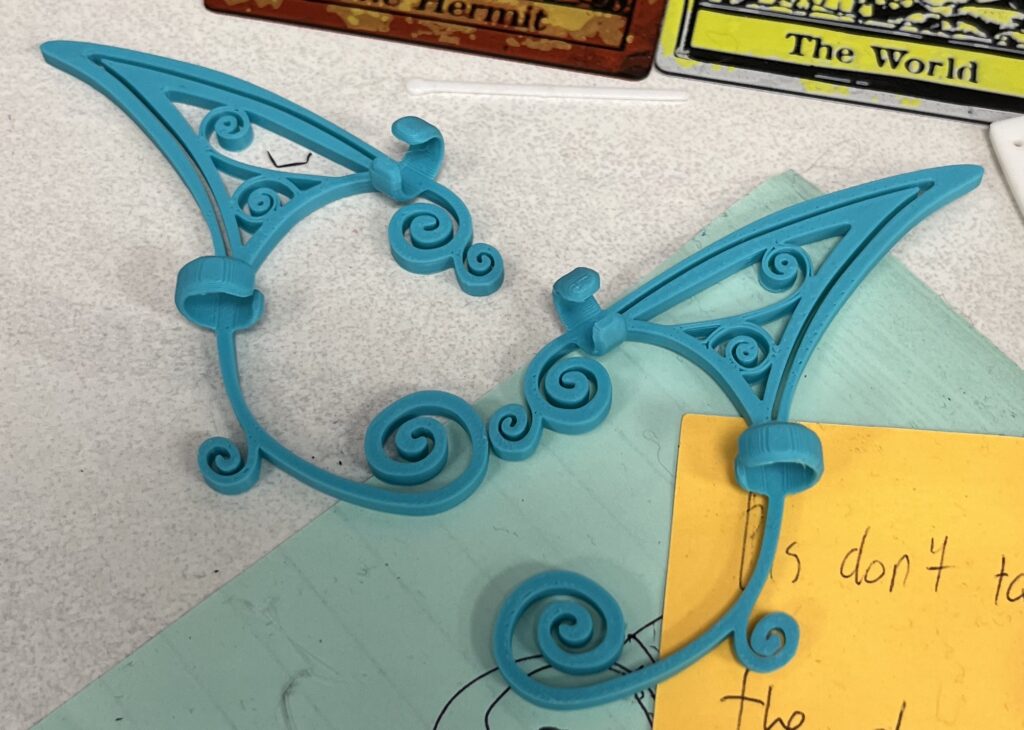
Title: Elven Ear Cuff 
Description: Instant elf transformation, no piercing required! This clip-on ear cuff demonstrates how 3D printing can produce delicate jewelry with intricate details. The swirling design would be challenging to craft by hand, but a 3D printer recreates it perfectly. Custom jewelry and cosplay accessories are now just a print away! (Source)